

Wooden beads and other turned elements
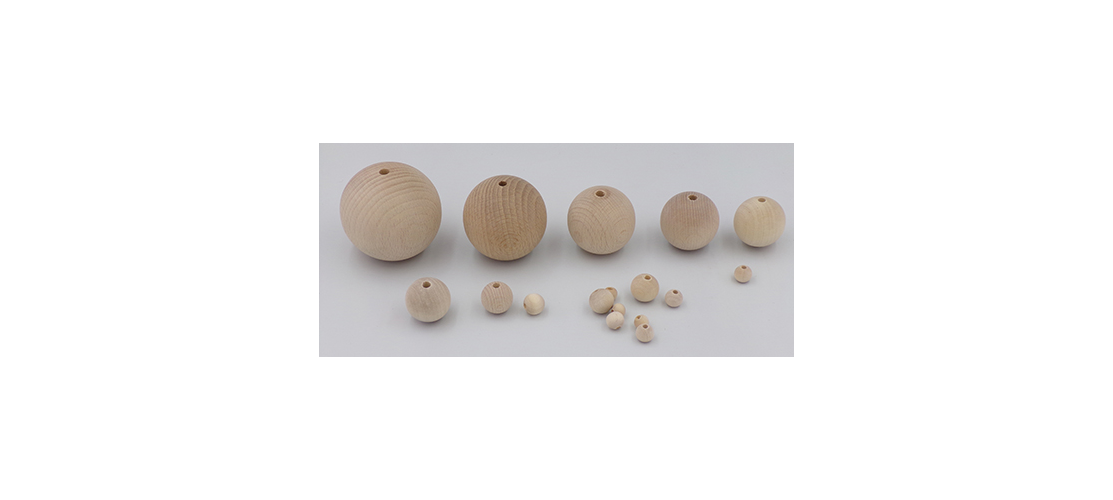
Marbles, beads and other lathed elements from wood
Wholesale and retail
Manufacturing of lathed elements for wooden toys
Bead sizes available range from 8 to 58 mm. Beads up to 20 mm are made out of birch and beech wood. Beads and marbles over 20 mm are made mainly out of beech wood. All beads are smooth, with or without holes, and can be painted on demand.
Manufacturing wooden beads and beads
We manufacture and sell all types of lathed elements, including beads of various diameters, from 6mm up to and including 58 mm.
.JPG)
ur regular stock and manufacturing offer consists of beads and marbles of the following diameters: 8mm, 10mm, 12mm, 14mm, 16mm, 18mm, 20mm, 25mm, 30mm, 35mm, 40mm, 50mm
We can also produce 6 mm, 45 mm, and 58 mm beads on order.
The regular material for smaller beads is birch wood, beads from 20-25 mm are made from beech wood.
The standard hole size is 4-5 mm, adjusted to regular jewellery manufacturing needs (like stringing the beads/marbles together).
While completing the manufacturing order, we can produce wooden beads and marbles without holes or with holes of a specific diameter, going through the entire bead or halfway through.
.JPG)
There is a possibility to add a one-sided engraving to the beads. In case of small beads, popular motifs include fruit, zodiac signs, animals, etc. They are commonly used for jewellery: bracelets, earrings, bead necklaces.
Logos, certificates, other advertising elements.
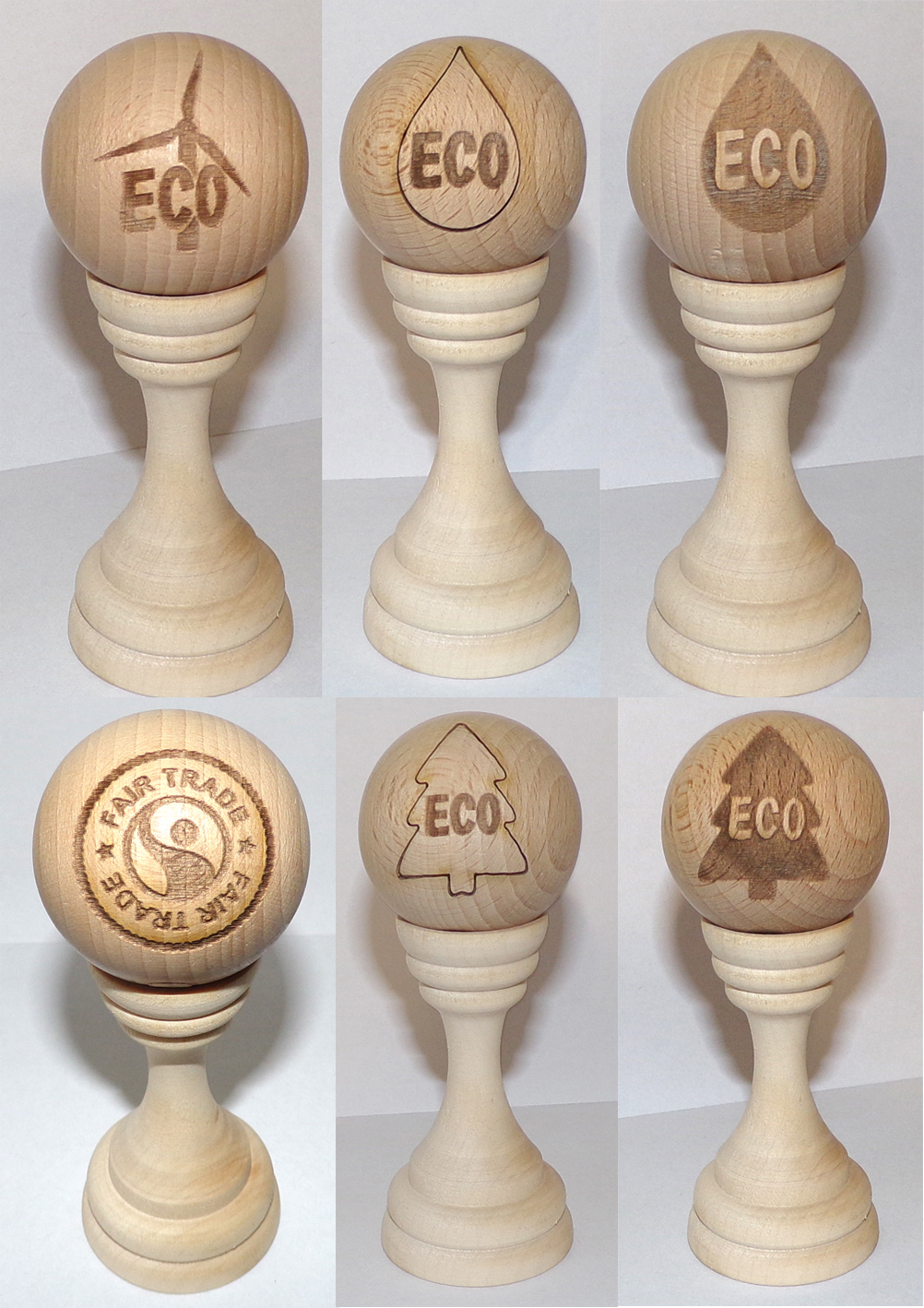
Wooden marbles, beads and other lathed elements
We offer production and sale - retail and wholesale - of all kinds of lathed wooden elements.
Our basic offer contains beads and marbles with straight-through holes for stringing up for jewellery and other decorative elements.
The wood used for beads under 20 mm is birch. Other sizes can also be made out of this wood, however the bigger sizes, such as 35 mm, 40 mm, 45 mm, 50 mm, and 58 mm are made out of beech wood by default.
Our full offer
Small beads: 6 mm, 8 mm, 10 mm, 12 mm, 14 mm
Medium beads with holes: 15 mm,16 mm, 18 mm, 20 mm, 25 mm, 30 mm
Large beech beads and marbles: 35 mm, 40 mm, 45 mm, 50 mm, 58 mm
All of the sizes listed above are diameters, the diameter of the hole is approximately 3-4 mm in small and medium beads, and 5 mm in big beads, for stringing up with thicker cords.
There is a possibility to order beads in sizes listed above or other sizes or shapes, with holes of any diameter, going through the entire bead or stopping halfway inside. The material can also be selected between birch and beech wood.
Regarding other types of wood or orders requiring exotic types of wood: accepting such orders depends on the local availability of the wood type in question and the properties and hardness of the exotic wood.
Resin lathes and resin composite lathes with inclusions of plastic, wood, plants, or amber are only possible for suitable toughness and homogeneity of the material. Tests need to be run on samples before lathing.
Wooden components for toys, furniture, etc.
Over the years we have manufactured various wooden elements for toys and other purposes. We use lathes with crystal knives - individual orders require preparation of high speed steel (HSS) knives. The cost of production depends on the size and complexity of a given element.
Raw, unpainted beads
Basic decorative element used in art, hobby and professional crafts, as well as eco crafts. They are meticulously polished with specialised polishing equipment using pumice granulate. This gives them the right finish for further dyeing or material application. It is also possible to polish the beads without the pumice, which gives them a smoother surface, reminiscent of a waxed finish, but less responsive to dyes.
Beads with holes or beads in alternative shapes are perfect for creating unique jewellery and decorations. They are also useful in manufacturing toys or conducting creativity/crafting workshops. They are nontoxic, since European trees do not produce as many natural insecti- and fungicides as trees from warmer climates.
Our beads are perfect for traditional wooden ecological jewellery and other ornaments. If we combine them with natural jute, cotton or hemp strings, the resulting composition will have a unique rustic charm. They can be used for creating macrames, dream catchers, small pendants and earrings.
Lacquering and painting
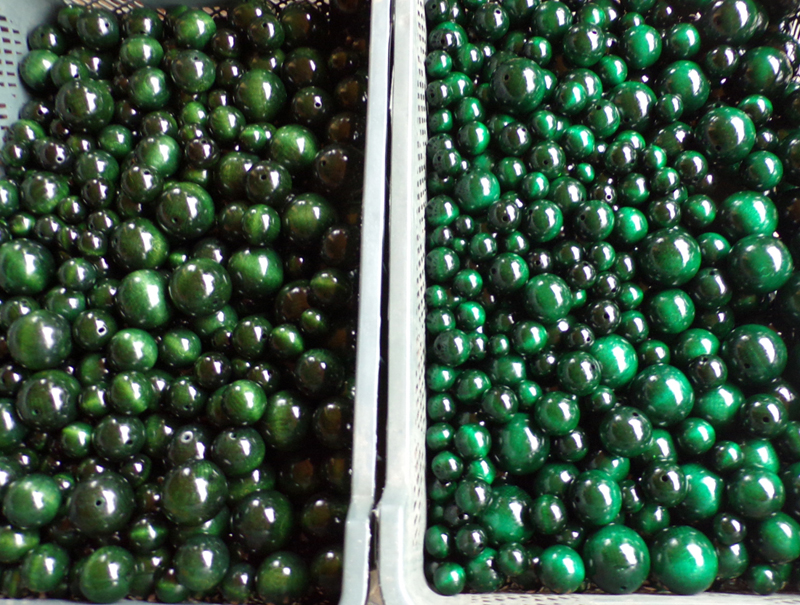
We lacquer or paint our beads on order. In the case of beads for traditional jewellery and ornaments, we use wood staining that is then lacquered to fix and deepen the colour. Unlike in case of opaque lacquers, this creates a lighter ring around the bead, characteristic for this type of dyeing method.
Painting is a multistage process taking several days.
After staining the beads, marbles or other lathed elements, they are left to dry. We wait until the water from the wood stain evaporates fully, leaving only the paint on the wood surface. This kind of dyeing does not penetrate deep into the structures of wood and needs to be fixed through lacquering.
Once dried, the stained beads are put inside the painting machine; during the first round of mixing, the beads soak up large quantities of the lacquer which is added several times in the process until the beads are evenly covered.
After the first round of painting, the beads are set aside for a day, then put back into the machine for another round of painting and lacquering. This time they are not as absorbent, so the amount of lacquer added is reduced. After this round, the beads gain a satin, wax-like finish.
This concludes the process of basic fixing and lacquering; they still lack the glossy surface and the depth of colour. After the second layer of lacquer dries off, the wood is slightly coarse, similarly to the regular paint pistol work - the wood fibres soaked up the lacquer and are standing upright. To reduce the coarseness of the surface before the next painting session, the beads are polished for several hours. This removes the coarse fibres and evens out the base surface of the lacquer.
After the polishing and approximately 3-4 days of painting, the beads are ready for the final phase of painting, consisting of several more days of lacquering and drying. This process uses far less lacquer - just enough to cover the beads without sticking them together. These finishing touches take between 2-3 days.
The finish of the beads depends on the number of layers and the lacquer used during the process - full gloss, semi-matte, matte.
Satin beads are covered in matte or semi-matte lacquer, with the whole process taking a couple of days. Full gloss beads are painted longer, using a special lacquer with crystal gloss.
beads for making bracelets, beaded necklace, beaded bracelet, beaded bracelet, wooden bead wholesaler, wooden bead manufacturer, wooden bead production